
Guides
Skiing in Poiana Brașov: The Complete Guide for 2026–27
Tony Denesa – Travel Advisor14 min read
Poiana Brașov in one paragraph
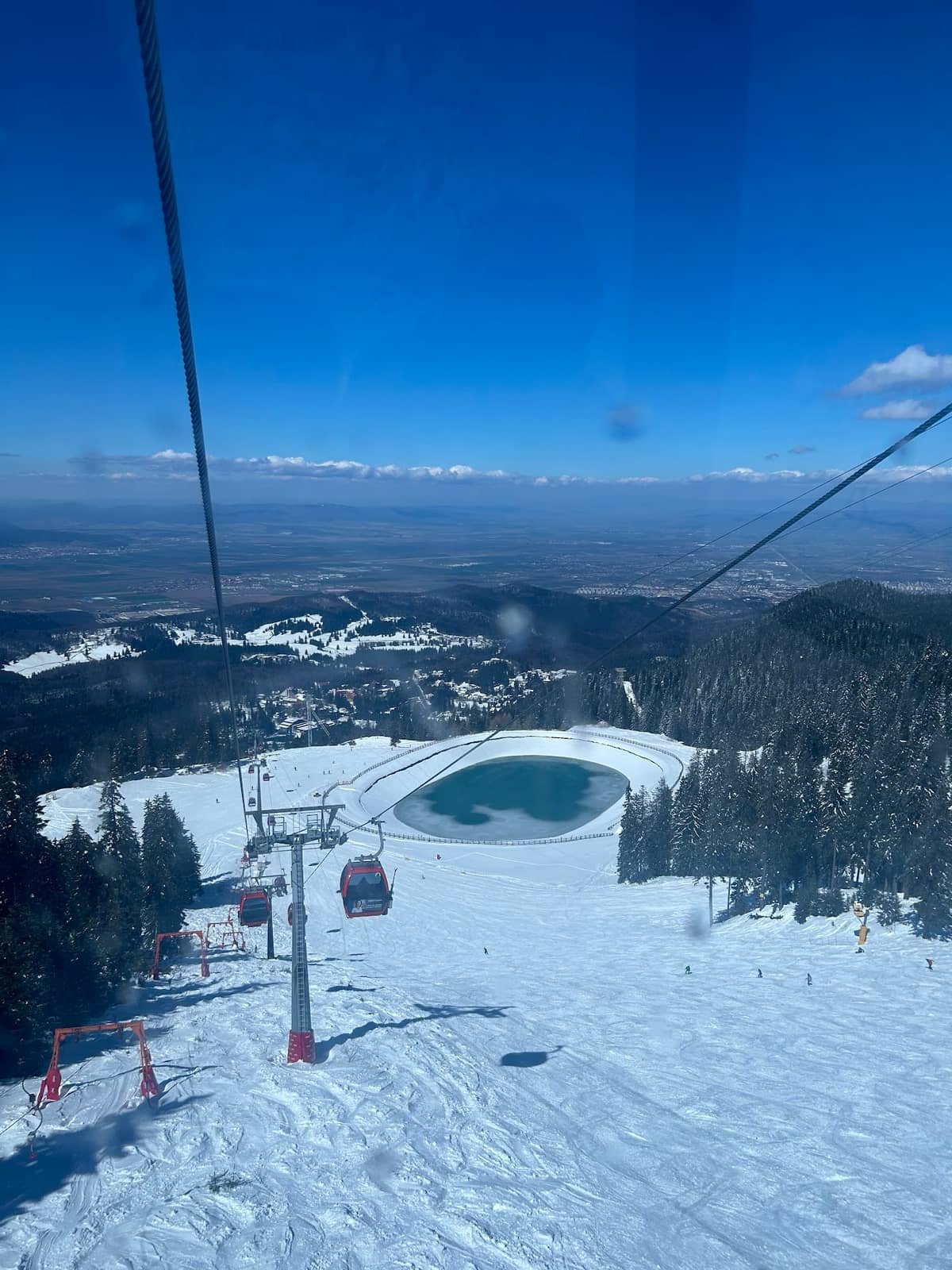
Few ski resorts anywhere sit this close to a real city. Poiana Brașov is a plateau at roughly 1,020 metres on the flank of Postăvarul, twelve kilometres and about twenty minutes by road above the Gothic roofs of Brașov. You can ski the morning on a black run beneath a 1,799-metre summit and be drinking mulled wine under the Black Church by dusk. That combination — a compact, well-lifted mountain plus a handsome old town — is what makes Poiana worth a trip, not sheer size. It is not the Alps and does not pretend to be. For a long weekend, a first week on skis or a family break with culture attached, it is the most complete winter base in Romania.
- Altitude: base around 1,010–1,050 m (Stadion 1,010 m, Bradul 1,035 m); top lift stations at 1,775 m (Capra Neagră) and 1,783 m (Kanzel T-bar). Postăvarul summit: 1,799 m.
- Pistes: seven homologated runs on the official lists, plus variants and link runs the locals call Ruia, Doamnei and Lupului inferior. The official total is usually given as about 24 km; other official figures range from 22.4 to 24.5 km.
- Lifts: one eight-seat gondola, two large cable cars, two chairlifts and a handful of T-bars and drag lifts, plus a moving carpet for children.
- Lift hours: 09:00–16:00, with the Bradul drag lift running until 18:00 (official 2025/26 schedule).
- Ski pass: a one-day adult pass cost 240 lei in 2025/26 (140 lei for children aged 6–12). The 2026/27 prices have not been published yet; the city council usually approves them at the end of October (checked September 2026).
For the resort itself — hotels, the village, what to do off the slopes — see our Poiana Brașov hub and the Poiana Brașov area guide. Live snow and lift news lives on our ski page.
Who runs the mountain (and why it matters)
Poiana has two owners. The pistes, the gondola, the chairlifts and the drag lifts belong to Brașov City Hall. The two big cable cars, Kanzel and Capra Neagră, belong to Ana Teleferic, part of the Ana Holding group. For a skier the practical consequence is good news: the city's ski card is valid on everything, including both cable cars, and a single ride up on any of the three main lifts costs the same.
The same card is bought at the ticket offices at the base stations or topped up online at skibv.ro. The card itself carries a 20-lei deposit. Online tickets are valid only for the date printed on them — buy the day before, not a week before, if the forecast is doubtful.
The pistes, from gentle to steep
Lengths and vertical drops below are the official technical sheets published by the local tourist information centre and the cable-car operator for 2025/26.
- Stadion — 612 m, about 30 m of vertical, served by a T-bar and a moving carpet. The first slope of every ski school in town, flat enough to learn to stop on.
- Bradul — 430 m, 71 m vertical, 70 m wide, its own drag lift. Gentle, wide and floodlit: the only run in Poiana with a fixed night-skiing installation.
- Drumul Roșu — the resort's signature: 4,752 m long with 715 m of vertical, from 1,765 m down to the village. Graded easy-to-intermediate, but long enough to burn the legs; the best first "real" run for a confident beginner.
- Sulinar — 2,820 m, 635 m vertical, intermediate, 35 m wide. The classic red, with a lovely view of the Bârsa plain on the way down.
- Lupului (upper) — 2,605 m (3,266 m with variants), 728 m vertical, black. Steep, often icy in the afternoon, served by the Ruia and Lupului chairlifts.
- Subteleferic — 2,200 m, 650 m vertical, black, FIS-homologated. It reopened in January 2025 after years out of use and runs directly beneath the cable cars.
- Kanzel — only 297 m (814 m with variants) near the summit, black, 50 m wide. Short, sharp and usually the best snow on the mountain.
Beginners should read our pistes for beginners guide; strong skiers, the advanced skier's guide. Individual pistes also have their own pages, such as Sulinar and Bradul.
The lifts, and how to beat the queues
Three big lifts leave from the village and all three reach roughly the same shoulder of the mountain between 1,700 and 1,775 m:
- Telegondola Postăvarul Expres — eight-seat cabins, about 2,140 m long, 2,400 people an hour. The workhorse of the resort and the lift you will use most.
- Telecabina Kanzel — a large cable car, about 2,450 m, 350 people an hour, starting a few steps from the gondola.
- Telecabina Capra Neagră — the historic cable car, in service since 1982, with cabins of around 60 places, 500 people an hour. It starts at the bottom of Bradul, on the other side of the village.
Up top, the Ruia six-seat chairlift (2,400 people an hour) keeps you circulating on the upper runs without going back to the village; the Lupului chairlift serves the lower part of the black Lupului. The Ruia, Kanzel, Subteleferic, Bradul and Stadion drag lifts do the rest.
The arithmetic explains the queues. On a busy Saturday in 2025/26 the turnstiles counted 20,000–30,000 passages a day, and the two cable cars together move fewer than 900 people an hour. The rules we follow:
- Be at the gondola at 09:00. The first hour is the quietest and the snow is freshly groomed.
- Stay high. Once up, ski Sulinar, Drumul Roșu's upper section and the Ruia runs off the chairlift rather than going down to the village each time.
- Eat early or late. The mountain empties between 12:30 and 13:30; that is the moment to take the long runs.
- Go midweek if you can. January weekdays outside school holidays are a different resort.
Snow, weather and the honest caveats
Poiana depends on artificial snow. In both of the last two seasons more than 90% of the snow on the pistes was man-made; in 2024/25 the snow-making system produced about 445,000 m³. The system is serious — around 120 lances, 34 mobile and 12 fixed snow guns in 2025 — and for 2026/27 the city is buying 14 new snow guns that work from −2.5 °C and enlarging the Ruia reservoir by 50,000 m³, both linked to the European Youth Olympic Festival.
What that means on the ground:
- Opening dates swing. The 2023/24 season opened on 30 November, 2024/25 on 18 December and 2025/26 only partially on 30 December, officially on 2 January. It closed on 29 March 2026. No opening date for 2026/27 has been announced; plan around mid-December at the earliest and treat Christmas-week skiing as likely, not certain.
- Afternoons get icy. Machine snow set hard by a cold night turns to boilerplate on the steep upper sections after lunch. Sharp edges matter more here than in the Alps.
- March is spring skiing. The lower runs soften and close first; by the last weekend of 2025/26 only the upper pistes were open.
- Fog and wind happen. The cable cars can stop in strong wind; the gondola usually keeps running.
Average January temperatures in Brașov itself run from about −6 °C at night to +2 °C by day; the pistes are colder. Check our Brașov weather forecast and the January climate page before you pack.
FOTE 2027: the Youth Olympics come to Poiana
From 14 to 21 February 2027, the European Youth Olympic Festival (FOTE/EYOF) returns to the Brașov region, with the alpine skiing events held in Poiana. The national championships used Lupului and the 1D slope as a test event in February 2026. Expect some runs to be reserved for training and races during that week and hotels to fill with teams; if you want quiet slopes, avoid mid-February 2027, and if you want atmosphere, come to watch.
What it costs, in outline
The full breakdown — hourly passes, points cards, the Wednesday discount for Brașov residents — is in our ski pass prices guide. The 2025/26 headline figures, checked September 2026: one day 240 lei, two days 400 lei, six days 900 lei; a single gondola ride up 40 lei. Children under six ski free with a family member. Budget roughly 100–150 lei a day for a complete rental set (rental and ski schools).
Getting there and staying
You can sleep in the village and walk to the lifts, or stay in the old town and commute. Bus 20 runs from Livada Poștei every 20 minutes through the day, and seasonal lines 60 and 100 were added last winter; details are in getting to Poiana Brașov and on the general getting around page. For where to sleep, from the Swissôtel to family chalets, see where to stay in Poiana Brașov and our full hotel list. Dinner, après-ski and the mountain huts are covered in après-ski and restaurants.
A three-day plan
- Day 1: gondola at 09:00, warm up on Drumul Roșu's upper section, then Sulinar before the crowds arrive. Lunch high, afternoon on the Ruia chairlift, down Drumul Roșu's full 4.7 km at 15:30. Evening in the old town.
- Day 2: Kanzel cable car for the summit runs while the snow is firm, Subteleferic or Lupului if you are strong, easy variants if you are not. Late lunch at one of the village restaurants.
- Day 3: a lesson in the morning, or a change of scene: Predeal, Sinaia and five other ski areas are within an hour — see ski resorts near Brașov. If Bradul is lit, finish with a few night runs.
Safety
The mountain-rescue service, Salvamont Brașov, has operated in Poiana since 1969 and is the only authorised rescue body on Postăvarul; its dispatch number is 0725 826 668, and 112 reaches every emergency service. There is a Salvamont point by the gondola's top station. Ski within your level on the black runs in the afternoon, carry a charged phone and check that your travel insurance covers winter sports.
The verdict
Poiana Brașov is small by Alpine standards and busy at weekends, and its snow is mostly manufactured. It is also beautifully placed, easy to reach, well lifted for its size and paired with one of the finest historic cities in Romania. Ski it midweek, early in the day, and give yourself evenings in Brașov: that is the formula.
Where to stay nearby
Live prices and availability on a map centred on this exact spot — hotels, apartments and hostels, so you can judge the walk from here rather than guess from an address.
Bookings made through this map earn us a commission. Your price is unaffected.