The city
Stalin City and the 1987 Revolt: Brașov's Communist Past, and Where to See It
Tony Denesa – Travel Advisor9 min read
The short version
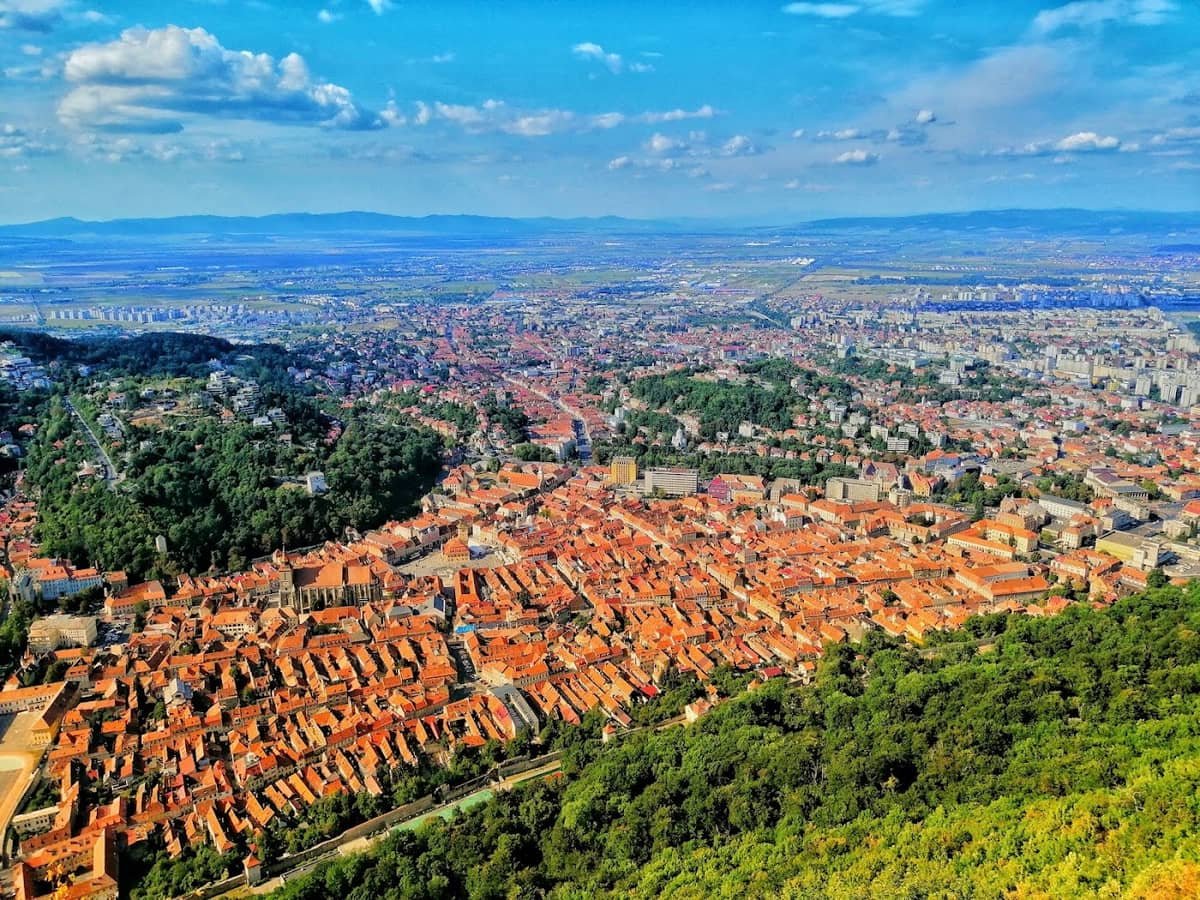
Visitors come to Brașov for the medieval old town, but the city most of its inhabitants live in was shaped by the second half of the 20th century. For ten years it was not even called Brașov: from 1950 to 1960 it was Orașul Stalin, "Stalin City", a showcase of socialist industrialisation. And on 15 November 1987, it was here that thousands of workers marched on the Communist Party headquarters in the first large street revolt against Nicolae Ceaușescu — two years before the regime fell. This is the story of communist Brașov, and where to find its traces today.
Why Brașov became "Stalin City"
After 1945 the new communist authorities needed model cities, and Brașov had everything they wanted: a strong industrial base, a skilled workforce and a symbolic value as a "bourgeois" Saxon town to be remade in the image of the working class. In August 1950 the local party newspaper published a "request from the workers" to rename the city; days later, on 22 August 1950, a decree turned Brașov into Orașul Stalin, and the surrounding region into the Stalin Region.
The name was spelled out, quite literally, on the mountain: the letters STALIN were planted in fir trees on the slope of Tâmpa, visible from the whole city. For a decade the Saxon Kronstadt of guilds and bastions was officially a monument to the Soviet dictator. After Stalin's death and the shifts that followed in the Eastern bloc, the city quietly recovered its name on 24 December 1960, and the letters on Tâmpa were erased. Today, the hillside carries a different sign: the white BRAȘOV letters, installed in 2004.
The industrial city
Brașov's factories were the engine of the regime's pride. The Steagul Roșu ("Red Flag") works built lorries; Tractorul built tractors that were exported widely; Hidromecanica and many others made components, machines and equipment. Tens of thousands of workers were brought in from the countryside and from other regions, and the population grew rapidly.
To house them, the city built vast estates of prefabricated apartment blocks: Astra, Răcădău, Noua, Tractorul. From the 1970s a new administrative centre, the Centrul Civic, rose north of the old town. At the same time Poiana Brașov was developed into Romania's flagship ski resort, with hotels built for foreign visitors and the party elite — see our Poiana Brașov guide for what it has become.
The 1980s: cold flats and empty shelves
By the 1980s Ceaușescu's drive to pay off the foreign debt at any cost had turned daily life into a grind: food rationing, queues for bread and meat, heating and hot water cut off in winter, electricity rationed at night. Industrial workers — the regime's supposed heroes — were paid in part according to "plan fulfilment", and when orders collapsed, wages were cut.
15 November 1987: the revolt
The spark came at the Steagul Roșu truck works. On 14 November 1987, a payday, workers in one of the factory's sections found that their wages had been cut sharply. The next morning, Sunday 15 November, was a local election day. Workers coming off and on shift gathered, refused to work, and set off on foot towards the city centre, several kilometres away. On the way they were joined by workers from Tractorul and by townspeople; estimates of the crowd run to around 20,000.
They marched singing *Deșteaptă-te, române!* — the old patriotic hymn that would become Romania's national anthem after 1989 — and shouting slogans for bread, heating and, soon, against Ceaușescu himself. At the county party headquarters in the centre — the building that today houses the Prefecture — protesters broke in, threw portraits of the dictator and propaganda material out of the windows and burned them in the street; reports of well-stocked food stores found inside, in a city of ration queues, only fuelled the anger. It was the first large-scale street revolt of workers during the communist years.
The response was swift. By evening, security forces had cleared the centre. In the following days and weeks around 300 people were arrested; many were beaten and interrogated. Sixty-one were put on trial for "disturbing public order", and many were deported with their families to other towns under forced-residence orders. The regime tried to present the revolt as "hooliganism". But news of it spread through Radio Free Europe, and a small number of dissidents — most famously Doina Cornea in Cluj — publicly declared their solidarity.
Two years later, in December 1989, the regime fell. Brașov, which had shown it could be defied, was among the cities where people died in the fighting of the revolution. Since 2021, 15 November has been officially marked as the Day of the Anti-Communist Revolt of Brașov.
Where to see communist Brașov today
- The route of the march: from the old Tractorul and Steagul Roșu area towards the centre, ending on the boulevard by the Prefecture, at the edge of the old town. Each year on 15 November, commemorations are held in the city; check our events calendar.
- Tales of Communism – MAdC, on Bulevardul Eroilor, a private exhibition devoted to life under the regime; check its current opening hours before you go.
- The estates: a bus ride through Astra or Răcădău shows the scale of the socialist city far better than any museum.
- The factory that became a district: the site of the Tractorul works has been redeveloped as Coresi — a shopping resort, apartment towers, parks and the Qosmo hotel, one of the city's newest luxury addresses. Walking there, it is hard to imagine the night shift of November 1987; that is part of the point.
Reading the two Brașovs together
The medieval city and the socialist city are the same place, seen at different moments. To understand the first, read our history of Saxon Brașov and visit the Black Church. To understand the second, look up at Tâmpa, where a dictator's name once grew in fir trees, and remember the Sunday morning when the workers of Stalin City walked into town and said no.
Where to stay nearby
Live prices and availability on a map centred on this exact spot — hotels, apartments and hostels, so you can judge the walk from here rather than guess from an address.
Bookings made through this map earn us a commission. Your price is unaffected.